Modern technology increasingly depends on powerful computing that can deliver advanced graphics and artificial intelligence without sacrificing efficiency. From smartphones and cars to PCs, wearables, consumer electronics, and connected devices, processors must handle increasingly sophisticated workloads while operating within practical power and performance limits. Imagination Technologies addresses these challenges through its portfolio of GPU intellectual property and related technologies.
With more than 30 years of GPU architecture development, Imagination describes its vision as “One Architecture, Infinite Possibilities.” Its technology brings together graphics, neural rendering, compute, and artificial intelligence, providing semiconductor companies with a flexible foundation for creating next-generation systems.
GPU Technology Inside Billions of Devices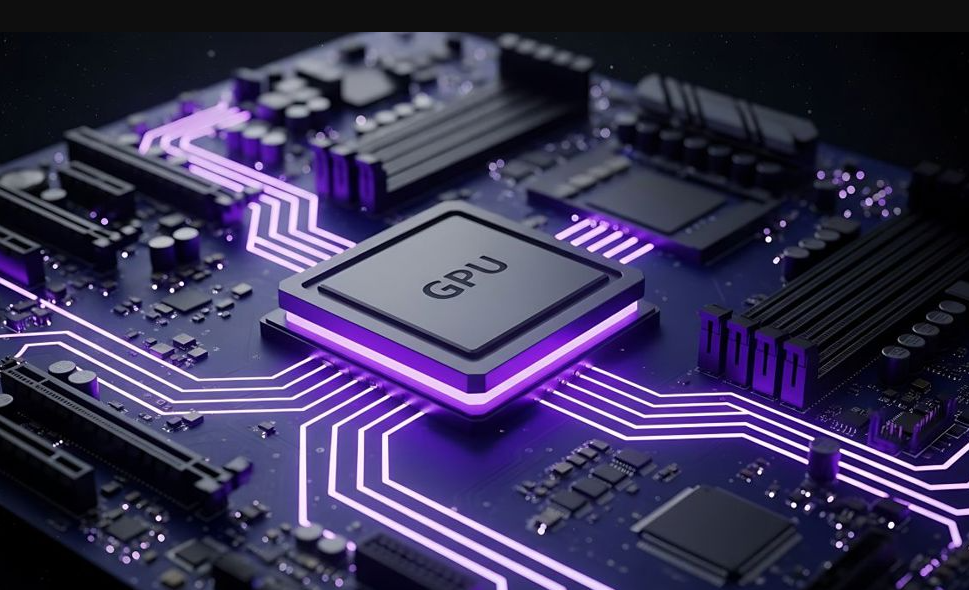
Imagination states that its GPU technology is present in more than 12 billion devices.
The company’s business model is different from that of a conventional finished-chip manufacturer. Imagination licenses its architecture as soft GPU IP, allowing licensees to integrate the technology into their own silicon.
That silicon ultimately appears across numerous categories, including cars, smartphones, wearables, PCs, and other electronic products.
This approach gives system-on-chip, or SoC, architects an opportunity to incorporate Imagination’s graphics and computing capabilities into hardware designed around their own markets and requirements.
From Graphics to Artificial Intelligence
Graphics remain fundamental to Imagination’s technology.
The company has spent decades optimizing its architecture for advanced gaming, sophisticated 3D user interfaces, and compute-intensive applications. Its graphics technology is designed to provide high performance while maintaining power efficiency across devices ranging from smartphones to PCs.
However, modern GPUs can do considerably more than produce graphics.
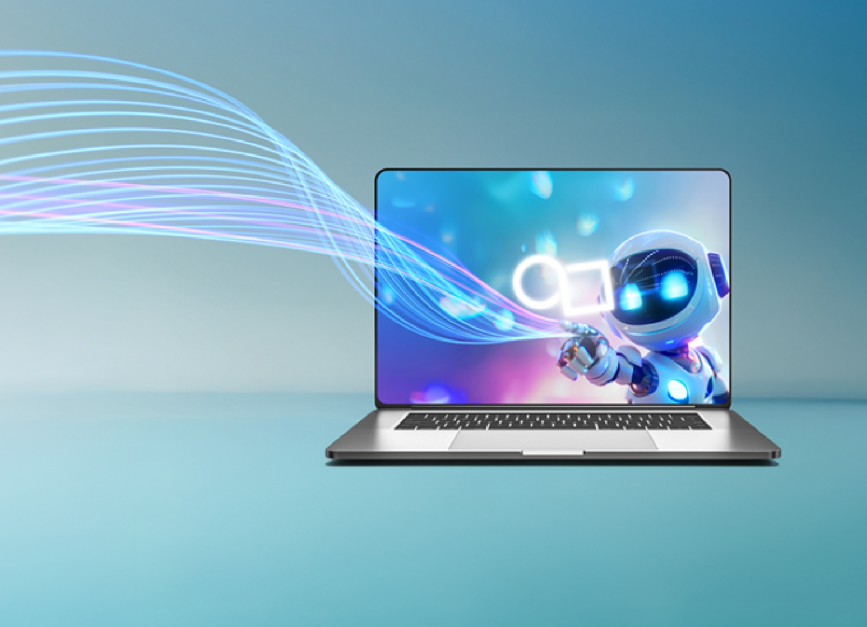
The highly parallel architecture originally developed to process complex 3D workloads is also suited to the computational demands of modern artificial intelligence. Imagination therefore positions its GPUs as platforms for both graphics processing and Edge AI acceleration.
Bringing AI to Edge Devices
Edge AI involves running artificial intelligence workloads directly on devices rather than depending entirely on remote cloud infrastructure.
Imagination highlights several applications for this technology, including computer vision, sensor fusion, language models, and neural rendering.
Power efficiency is especially important in these environments. A mobile device, wearable, automotive system, or other edge product cannot simply consume unlimited power to increase computational performance.
Imagination’s programmable GPU cores are designed to accelerate AI while supporting lower-precision number formats intended to improve edge efficiency.
Efficiency Through Intelligent Architecture
Efficiency is one of the central characteristics emphasized by Imagination.
Its GPU architecture uses tile-based deferred rendering, which is designed to minimize unnecessary data movement and remove redundant operations early in the processing pipeline.
Reducing unnecessary work is particularly valuable in power-constrained products. Performance is important, but achieving that performance efficiently can be equally significant.
This philosophy makes the technology relevant across a wide variety of markets where thermal, power, and physical limitations influence system design.
Flexibility for SoC Architects
Modern systems frequently contain multiple specialized processing components.
When another part of an SoC becomes overloaded, Imagination explains that compute-intensive tasks can be moved onto an AI-capable GPU. Its GPUs can also communicate directly with other accelerators, supporting the creation of an efficient Edge AI subsystem.
This flexibility gives architects more options when deciding how workloads should be distributed throughout a system.
Rather than viewing the GPU only as a graphics engine, Imagination positions it as a programmable resource capable of supporting multiple types of processing.
Technology Designed for a Changing Future
Artificial intelligence is evolving extraordinarily quickly. Models, operators, and software requirements can change much faster than physical silicon.
A chip, meanwhile, may remain in the market for many years.
Imagination argues that general-purpose accelerators such as its GPUs can help silicon remain relevant as workloads evolve. Programmability gives developers an opportunity to adapt software without requiring every future workload to have been predicted when the hardware was originally designed.
The company’s programming model uses familiar industry-standard APIs including Vulkan and OpenCL, supported by a wider software ecosystem and optimized backends for popular frameworks.
Automotive Applications
Automotive technology represents an important market for Imagination.
The company identifies applications including in-vehicle infotainment, cockpit displays, sensor fusion, and ADAS functions.
Modern vehicles increasingly rely on sophisticated visual interfaces and extensive processing capabilities. A GPU may therefore need to support rich graphics while also contributing to compute-oriented tasks.
Imagination also highlights ASIL-B safety coverage among the technologies available to SoC architects, reflecting the specialized requirements associated with automotive applications.
Mobile, Consumer and IoT
Mobile devices are another major application area.
Imagination’s technology can support graphical user interfaces, mobile gaming, language models, and neural rendering in smartphones and related products.
Within consumer electronics and IoT, applications include graphical interfaces, voice and gesture processing, data preprocessing, and computer vision.
These workloads demonstrate how the role of graphics processors has expanded. The GPU is increasingly becoming a broader computing resource capable of contributing to intelligent experiences throughout a device.
Desktop and Advanced Graphics
At the other end of the performance spectrum, Imagination targets desktop applications such as PC gaming, professional rendering, desktop productivity, and cloud gaming.
The company also emphasizes advanced graphics technologies including ray tracing and DirectX support. Imagination states that it pioneered the world’s first hardware-based ray tracing for mobile.
These technologies are intended to enable increasingly sophisticated visual experiences while maintaining the efficiency that remains central to the company’s architectural philosophy.
The E-Series and the Next Generation
Imagination’s product families include the A-Series, B-Series, C-Series, D-Series, and E-Series GPUs.
The latest E-Series represents the company’s growing focus on the convergence of graphics and on-device AI. Imagination describes it as establishing the GPU as a principal accelerator for both graphics and AI workloads.
The company’s wider innovation portfolio also highlights technologies such as Matrix Accelerator, Neural Super Resolution, and Burst Processors, demonstrating continued development around next-generation graphics and intelligent computing.
Conclusion
Imagination Technologies is helping redefine the role of the GPU in modern computing. After more than three decades of architectural development and technology deployed across more than 12 billion devices, the company is extending its expertise beyond traditional graphics into AI, compute, neural rendering, automotive applications, and intelligent edge processing.
Through efficient architecture, programmability, advanced graphics features, Edge AI capabilities, and a flexible soft-IP licensing model, Imagination provides SoC designers with technology that can be adapted to numerous markets.