The Sacred Silence of Northern Hills
Kyoto is a city of layered contradictions: crowded bullet train stations and bustling neon avenues sit mere blocks away from thousand-year-old cedar forests where silence is treated as a sacred presence. To experience the authentic spiritual heart of Japan’s ancient capital, one must rise before dawn and venture into the quiet northern districts of Daitoku-ji and Ohara.
Inside sub-temples like Zuiho-in and Koto-in, the stone and moss gardens represent masterclasses in intentional spatial reduction. Raked white gravel patterns evoke ocean ripples, while solitary granite boulders represent mountain peaks emerging through mist. Sitting on the smooth wooden engawa veranda with your shoes removed, the mind mirrors the absolute clarity of the landscape.
The gentle drip of rainwater falling from bamboo gutters onto smooth river pebbles creates an organic acoustic cadence that dissolves mental agitation. You realize that Zen garden architecture was engineered precisely as an optical instrument to quiet the human ego.
“In Kyoto, beauty is never loud. It hides in the moss between stepping stones and the gentle bow of a bamboo stalk under rain.”
— Amelia Brooks, Kyoto Reflections
Artisan Potteries and the Path of Tea
In the narrow lanes behind Kiyomizu-dera, fifth-generation pottery workshops fire wood-burning climbing kilns (noborigama). The resulting Bizen and Shigaraki ceramics are celebrated for their natural ash glazes, flame markings, and intentionally asymmetrical silhouettes.
Attending a quiet morning tea gathering with a Kyoto chajin (tea master) reveals the profound philosophy of ichigo ichie: the realization that this exact moment in time, with these specific individuals, drinking this specific tea from this specific bowl, will never happen again in the history of the universe.
Every movement—the wiping of the bamboo tea scoop, the turning of the tea bowl to present the finest side to one’s guest, the soft bow of gratitude—is an exercise in radical mindfulness and unconditional hospitality.
Wandering the Canals at Twilight
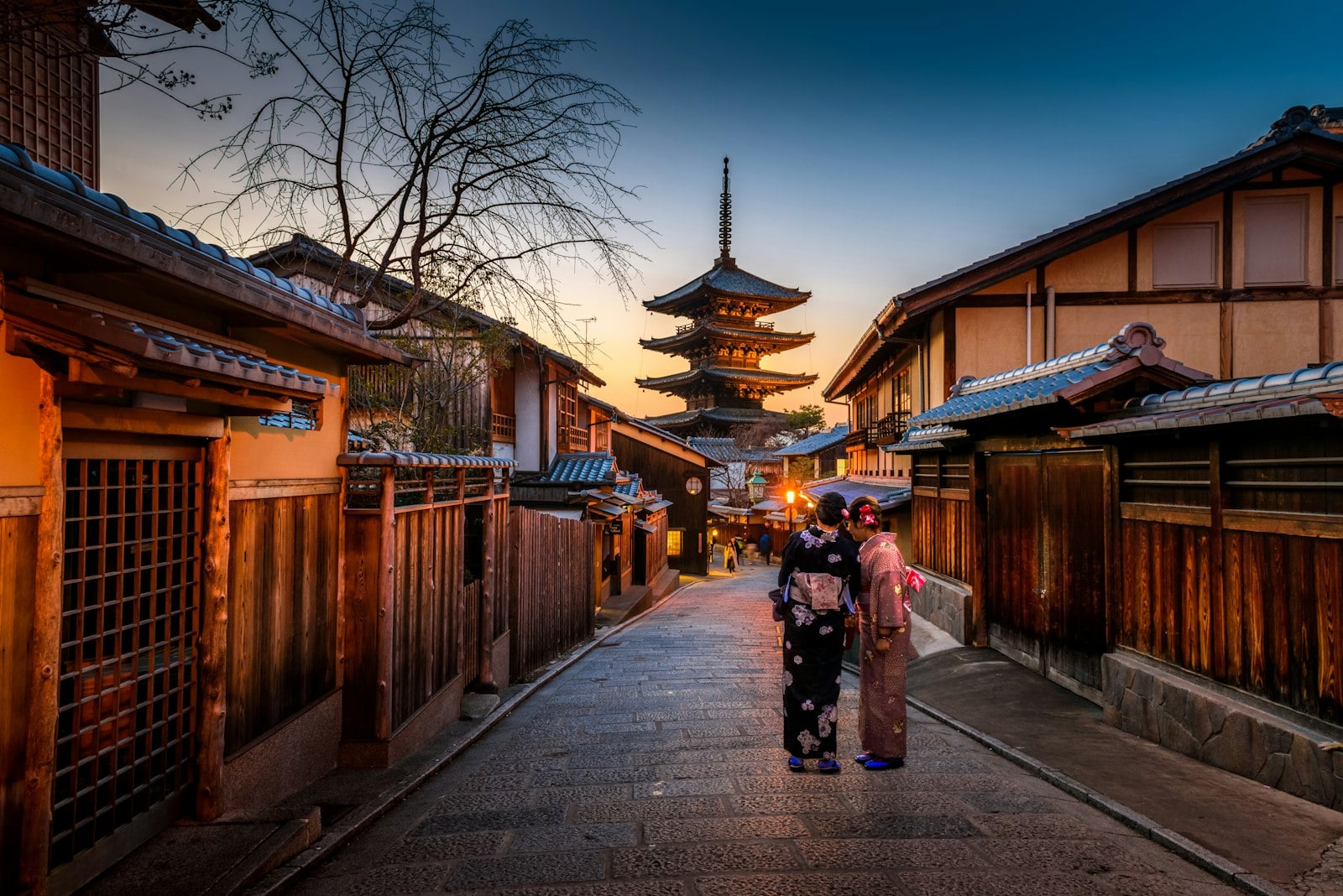
At dusk, stroll along the stone path of the Shirakawa canal in Gion. Lanterns glow softly through wooden slatted machiya facades, willow branches brush the rippling water, and the distant clip-clop of wooden geta sandals echoes in the twilight.
Kyoto teaches us that simplicity is not the absence of richness, but the supreme cultivation of elegance through mindful presence.
Zen Courtyards and Quiet Temple Gardens
Kyoto reveals its deepest poetry away from tourist hubs, in the quiet moss-carpeted courtyards of ancient Buddhist temples. Stepping through low wooden gates, the bustling sounds of the modern city vanish, replaced by the gentle drip of bamboo water fountains and the soft rustle of Japanese maple leaves.
Sitting upon smooth cedar verandas, one contemplates dry stone gardens where raked white gravel simulates ocean currents flowing around solitary mossy boulders. This visual manifestation of wabi-sabi aesthetics reminds the viewer of the transient beauty and impermanence of all things, instilling deep internal peace.
Wandering through residential alleys lined with traditional wooden machiya townhouses, you discover hidden teahouses serving fragrant bowls of freshly whisked matcha paired with seasonal wagashi sweets. These intimate cultural encounters leave an indelible imprint of grace, discipline, and mindful beauty on the traveler’s soul.
Reflections on Craft and Vida consciente
Wandering through the secluded temple precincts of ancient Kyoto reveals a timeless world of contemplative beauty. Moss-covered stone paths, gracefully arched wooden bridges, and serene ponds filled with colorful koi invite travelers into a state of quiet wonder.
Sitting on a temple veranda listening to rain falling softly upon cedar shingles provides an unforgettable lesson in mindful presence. The subtle interplay of shadow, wood, and greenery calms the restless spirit.
Discovering an unassuming teahouse down a quiet residential lane offers the opportunity to enjoy whisked ceremonial tea prepared with centuries-old precision, leaving an enduring impression of elegance and grace.
Kyoto’s quiet temple gardens provide a sanctuary where the restless spirit finds peace. The harmonious union of moss, stone, and bamboo creates an atmosphere of timeless reverence that lingers in memory long after the journey ends.